

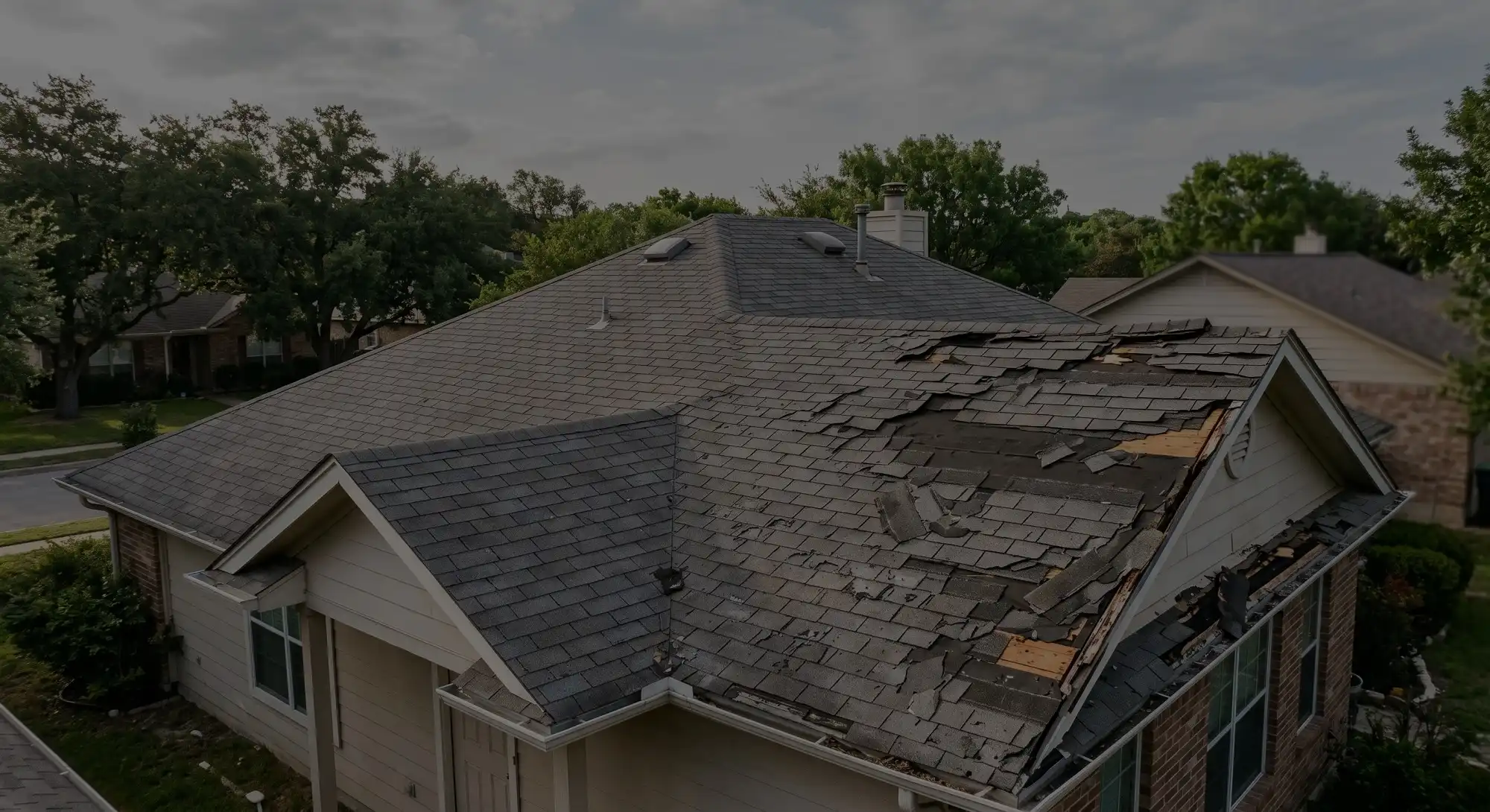
The fastest way to get insurance to pay for a roof replacement in Texas is to prove your roof failed because of a covered event, such as hail or wind, not age or neglect, and to file before your policy deadlines run out. Storm damage is usually covered, but ordinary wear and tear is not.
Roof damage claims are also where many homeowners feel outmatched: the adjuster works for the insurer, and the deadlines are easy to miss. The Omar Ochoa Law Firm helps property owners across Texas review a denial or underpayment and decide on the next step. For property-specific questions, speak with our experienced Texas property damage lawyers.
Does Homeowners Insurance Cover Roof Replacement in Texas?
Most standard Texas homeowners policies cover roof replacement when the damage comes from a sudden, covered peril. Commonly covered causes include hail that bruises or fractures shingles, wind that lifts, creases, or tears off shingles, fallen trees or storm debris, and fire or lightning. They generally do not cover damage the insurer treats as gradual or preventable, such as age and ordinary wear and tear, poor maintenance or deferred repairs, manufacturing defects in the shingles, and damage that existed before the policy started.
This distinction drives most disputes. An insurer may agree your roof is damaged but argue the cause is age rather than a storm, shifting the loss from "covered replacement" to "your responsibility." How the cause of loss is documented often decides whether the claim is paid, and it can be the deciding factor in a Texas roof insurance claim.
ACV vs. RCV: How Texas Roof Claims Actually Get Paid

Even a covered claim rarely arrives as a single lump-sum check. Understanding how to get insurance to pay for a new roof means understanding two payment terms. Actual Cash Value (ACV) is the cost to replace the roof minus depreciation for age and condition, and it is usually the first payment an insurer issues. Replacement Cost Value (RCV) is the full cost to replace the roof with materials of like kind and quality, before subtracting depreciation.
If your policy is an RCV policy, the insurer typically holds back the depreciated amount, called recoverable depreciation, and releases it after you complete the work and submit proof, such as a signed contract and final invoice. If your policy pays on an ACV basis only, you can't recover that held-back depreciation, which can leave a significant gap.
Your deductible also comes out of the payment. Many Texas policies apply a separate, percentage-based windstorm or hail deductible, so homeowners expecting a flat dollar deductible are sometimes surprised by a larger out-of-pocket amount.
Step-by-Step: How to Get a New Roof for Insurance in Texas
A clean, well-documented claim moves faster and resists lowball offers. Here is a practical sequence for getting a new roof approved by insurance.
- Document the damage immediately. Photograph and video the roof and any interior damage as soon as it is safe. Note the date of the storm, keep local weather or hail reports, and make reasonable temporary repairs (like tarping) to prevent further damage. Save all receipts for temporary repairs and losses related directly and indirectly to the damage.
- Read your policy before you call. Confirm whether your coverage is RCV or ACV, find your wind/hail deductible, and check the claim-reporting and suit-limitation deadlines. The policy controls the outcome more than any phone conversation.
- File promptly and in writing. Report the claim without delay and keep a written record of every communication. Late notice is one of the most common reasons insurers deny otherwise valid roof claims.
- Get an independent inspection and estimate. Have a licensed, reputable roofer or independent inspector document the storm-related damage and provide a written scope and estimate, giving you a benchmark to compare against the insurer's number.
- Be prepared when meeting the insurance company's adjuster. Be present for the inspection, point out every area of damage, and provide your photos and independent estimate. Adjusters can miss damage, especially on large or steep roofs.
- Review the insurer's estimate line by line. Compare the insurer's scope and pricing to your own, and watch for missing components, underpriced materials, ignored code-upgrade requirements, and aggressive depreciation.
- Push back on underpayments in writing. If the estimate is low or the claim is denied, request a re-inspection, submit supporting documentation, and ask for the specific policy language the insurer relied on
Texas Deadlines That Protect You: The Prompt Payment of Claims Act
Texas law sets clear deadlines for insurers. Under the Prompt Payment of Claims Act in Texas Insurance Code Chapter 542, an insurer generally must:
- Acknowledge the claim, begin investigating, and request needed information within 15 days of receiving notice of the claim.
- Accept or reject the claim in writing within 15 business days after receiving all requested items, and give a reason for any rejection.
- Pay an accepted claim within 5 business days after notifying you it will pay.
When an insurer misses these deadlines, the statute can entitle the policyholder to the claim amount plus 18% annual interest and reasonable attorney's fees. Importantly, this is often described as a strict-liability rule, meaning you may recover the penalty for the missed deadline itself, without separately proving bad faith. Related duties against unfair claim-handling appear in Texas Insurance Code Chapter 541.
Storm and Hail Claims: What Chapter 542A Changes
Because most Texas roof claims arise from hail, wind, or other storms, many fall under Texas Insurance Code Chapter 542A, sometimes called the "Hail Bill," which applies to first-party property claims caused wholly or partly by forces of nature.
Two features matter most to homeowners. The first is pre-suit notice: before filing suit, you generally must give the insurer written notice at least 61 days in advance, stating the acts complained of, the amount owed, and attorney's fees incurred. Skipping this step can pause the case or limit recovery of attorney's fees. The second is reduced penalty interest: for claims under Chapter 542A, the delayed-payment penalty is tied to the judgment interest rate plus 5% (commonly around 10%), rather than the flat 18% under Chapter 542.
These rules do not take away your right to be paid fairly, but they do add procedural steps that are easy to get wrong without guidance.
.webp)
Why Insurers Deny or Underpay Roof Claims
Knowing the insurer's likely playbook helps you respond. A roof claim is often denied or shortened because the insurer blames wear and tear or age instead of a storm, claims that hail damage is cosmetic rather than functional, or claims the roof was already failing before the loss.
Just as often, the problem is insufficient documentation in the form of thin photos or vague estimates, late reporting long after the storm, or a payout that technically applies coverage but leaves little after the deductible and depreciation are subtracted.
Each of these is a characterization, not an automatic bar to payment. Strong, storm-specific evidence and the right policy language often move a claim back into the covered column.
When the Insurer Sends Its Own Engineer
A denied roof claim is often not the end of the paperwork but the start of a battle of experts. When the loss is significant, insurers frequently hire their own engineering or forensic firm to inspect the roof and produce a report attributing the damage to age, wear, or a manufacturing defect rather than the storm. That report becomes the insurer's basis for a denial or a reduced payment, and it is written to be difficult to argue with.
Countering it takes documentation of equal or greater weight. The evidence that holds up when the carrier pushes back includes a detailed, line-item replacement estimate built in the same software insurers use, such as Xactimate; a licensed engineer's report that ties the damage to a specific storm date, dated photos and video; moisture readings; independent hail or wind verification data for your address; and proof that damaged shingles are discontinued or cannot be matched.
A licensed professional's causation report is often what turns a wear-and-tear denial back into a covered roof replacement claim.
What to Do If Your Roof Claim Is Denied or Underpaid
A denial or lowball offer is a starting position, not a verdict. You can request a re-inspection and supply additional photos, roofer reports, and weather data, or invoke the policy's appraisal clause, if it has one, to resolve a disagreement over the amount of loss through independent appraisers and, if needed, an umpire.
You can also escalate a formal dispute in writing, citing the specific coverage and the Prompt Payment deadlines the insurer may have missed, and hire an attorney who can review the policy, evaluate a possible Chapter 542 or 542A claim, and handle the pre-suit notice correctly.

How the Appraisal Clause Can Break a Roof Claim Deadlock
When you and your insurer agree the roof damage is covered but cannot agree on the amount, the appraisal clause is one of the most effective tools available to Texas homeowners. Most homeowners policies include one, and it settles disputes over the dollar value of the loss without a lawsuit.
The process is straightforward. You and the insurer each select a competent, independent appraiser, and those two appraisers choose a neutral umpire. The appraisers inspect the roof, exchange figures, and any two of the three, including the umpire, can set a binding amount. Appraisal is usually faster and far less expensive than litigation, and it takes the number out of the adjuster's hands.
However, there is an important limit. An appraisal decides the amount of loss, not whether the claim is covered in the first place. If the insurer denies coverage outright, blames wear and tear, or acts in bad faith, an appraisal will not resolve those issues, with a Chapter 542 or 542A claim being the better path. Knowing which dispute you actually have, the price, and the coverage determines whether appraisal is the right move.
Common Mistakes That Sink a Texas Roof Claim
Even a valid roof claim can fall apart over avoidable errors. Watch out for these common mistakes that give insurers room to delay, reduce, or deny your payout.
- Waiting too long to report the damage;
- Accepting the first ACV check as final without confirming recoverable depreciation;
- Signing a broad assignment of benefits without understanding it;
- Letting a contractor act as your advocate with the insurer instead of getting independent legal review;
- Missing the 61-day pre-suit notice window on a storm claim.
Avoiding these missteps keeps your claim on solid footing and preserves your leverage if the insurer tries to underpay or deny a valid roof replacement.
Protect Your Roof, Your Wallet, and Your Rights
Getting insurance to pay for a roof replacement in Texas is less about luck and more about proof, timing, and knowing what the law requires of your insurer. Covered storm damage, a correct read of ACV versus RCV, prompt filing, and firm follow-up on underpayments all tilt the outcome in your favor.
The Omar Ochoa Law Firm reviews policies, denials, and underpaid roof estimates for property owners across Texas, with attention to deadlines and the coverage language that decides these claims. If your roof claim was denied or shorted, contact us today for a clear read on where you stand.

Omar Ochoa has been nationally recognized as one of the best young trial lawyers in the country. He's represented clients in federal and state courts and arbitrations throughout the United States and internationally. He is highly experienced in a wide range of complex litigation and has handled a variety of cases. He has recovered hundreds of millions of dollars for clients of all types — from individuals to mid-sized business owners to multi-national companies.
Table of Contents
A Denied Roof Claim Is Not the Final Word
If your insurer underpaid or denied a roof claim, a focused review of your policy and the adjuster's estimate can show whether the decision holds up. Contact our dedicated team today.
Contact UsThis is some text inside of a div block.
Contact UsBefore You Accept a Roof Check, Have It Reviewed
A quick review of your policy and the insurer's estimate can reveal missing scope, over-aggressive depreciation, or a wrongly denied cause of loss. Contact our firm for guidance.