

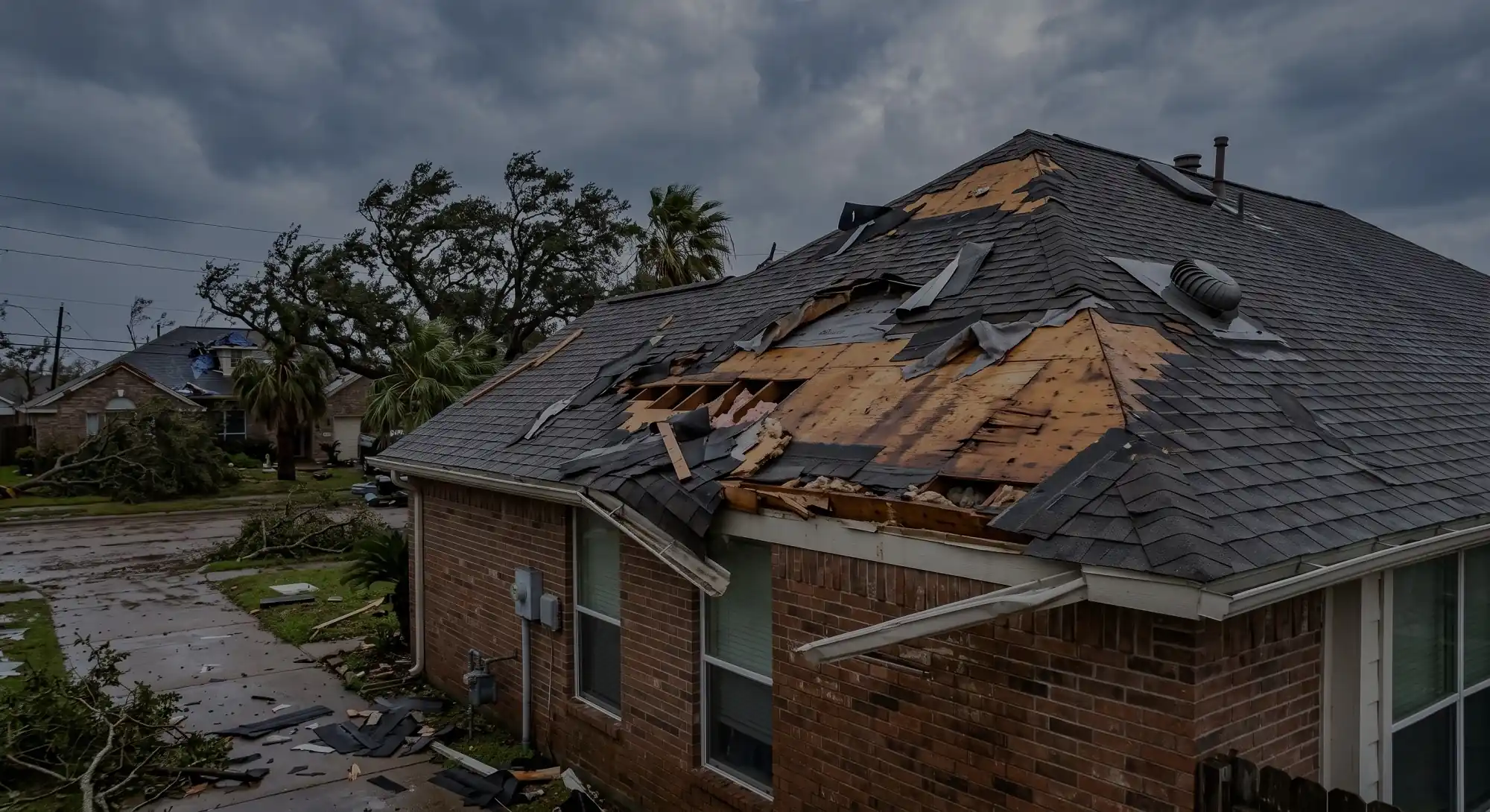
Texas sees more severe hail, wind, and hurricane damage than almost any other state, so roofing work and insurance claims go hand in hand here. The roofing laws in Texas that govern everything from licensing to deductibles to building codes are scattered across several statutes and change from one city to the next. Knowing these rules protects you twice: when you hire a contractor, and when you file a claim.
This guide covers what Texas law requires of roofers, how the deductible law affects your claim, which codes decide repair versus full replacement, and what to do when a contractor or insurer crosses the line. If a storm has already damaged your home, a Texas roof damage attorney can review your claim.
Does Texas License Roofing Contractors?
The Texas Department of Licensing and Regulation regulates dozens of trades but issues no occupational license for roofers. Anyone can print a business card and start selling roofs, with no exam, no background check, and no state registration required. Two things fill part of that gap:
- Voluntary credentialing: The Roofing Contractors Association of Texas (RCAT) runs a voluntary licensing program that requires a roofing exam and proof of insurance. It is a credibility signal, not a legal requirement.
- Local registration: Cities set their own rules. Austin, Dallas, and Houston require contractors to register locally and pull permits before work begins, even though the state does not.
Lawmakers came close to changing this. During the 2025 session, House Bill 3344, the Roofing Contractors Consumer Protection Act, proposed mandatory state licensing for reroofing contractors through TDLR, complete with background checks and a public database.
The bill advanced through committee but never reached a floor vote before the session ended on June 2, 2025, so it did not become law. You can track its status on Texas Legislature Online. For now, roofing in Texas remains unlicensed at the state level, and vetting a contractor falls to you.
The Texas Deductible Law and Why "Free Roof" Offers Are Illegal
One roofing law reaches straight into your wallet, and it catches many homeowners by surprise after a storm.
The Texas deductible law came from House Bill 2102, took effect September 1, 2019, and now lives in Chapter 707 of the Texas Insurance Code. It requires the policyholder to pay the deductible on any first-party property claim, and it turns the old "we will waive your deductible" pitch into a crime.
Under the law, a contractor may not pay, waive, rebate, absorb, or credit your insurance deductible, and they may not knowingly help you avoid paying it. A violation is a Class B misdemeanor, punishable by up to 180 days in county jail and a fine of up to $2,000, and that penalty can apply to both the contractor and the homeowner. The Texas Department of Insurance enforces the rule and warns homeowners away from "free roof" offers.
If a roofer offers to "eat" your deductible, walk away. The savings are an illusion because to recover that money, the contractor typically downgrades materials, inflates the invoice sent to your insurer, or skips repairs you paid for.
Your insurer can also demand reasonable proof that you paid the deductible before releasing recoverable depreciation. A waived deductible can freeze the rest of your payout.
Why a Roofer Cannot Act as Your Insurance Adjuster
After a storm, some contractors offer to "handle the whole claim" with your insurer. Texas law draws a hard line against that.
A roofing contractor who is doing or bidding on the work may not also act as a public insurance adjuster on the same claim. Texas Department of Insurance rules prohibit a contractor from negotiating your settlement, advising you on coverage, or advertising that they will recover "every dollar you are owed", because doing the work and adjusting the claim is a conflict of interest.
Only a licensed public adjuster can legally negotiate a claim for a fee, and only an attorney can give you legal advice about it. When a contractor blurs those roles, your claim can end up built around the roofer's interests rather than yours. Watch for any authorization form that hands the contractor control of your claim or assigns your insurance benefits, and read it closely before signing.
Roofing Permits and Building Codes Across Texas Cities
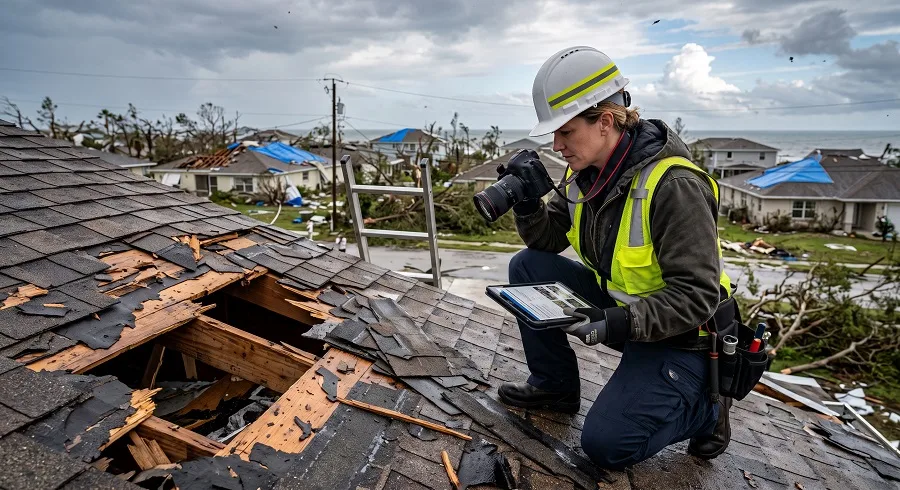
Because Texas has no statewide roofing license, most of the enforceable rules on a roofing job come from local permits and building codes, and they shift at the city line. A straight tear-off and re-shingle is often exempt, but changing the roof's framing or pitch usually triggers a permit, and requirements vary sharply between jurisdictions. A few examples of how local this gets:
- Many cities require a permit only when you alter the structure, while a like-for-like reroof needs none.
- Some cities restrict materials. The City of Andrews, for example, requires standing-seam metal roofs to be at least 26-gauge with an earth-tone factory finish and bans installing new shingles over an existing roof.
- Cities such as Austin, Dallas, and Houston require the contractor to register locally before pulling a permit.
Beneath the local permit sits a building code. Most Texas cities adopt a version of the International Residential Code and the International Energy Conservation Code, which set standards for roof assemblies, underlayment, drip edge, ventilation, and energy performance, such as solar reflectance on certain roofs.
Confirm which code year your jurisdiction enforces before beginning a project. In most Texas cities, a homeowner may pull a permit and reroof a home they own and occupy, but you remain responsible for meeting code, and a failed final inspection can resurface when you sell.
The Texas 25% Roof Replacement Rule
One code provision matters more than any other to an insurance claim because it can turn an approved patch into a full replacement.
The 25% rule comes from Section R908.3 of the International Residential Code, which most Texas jurisdictions have adopted. If more than 25% of a roof section is repaired or replaced within any 12-month period, the entire section must be brought up to current code rather than patched.
That threshold has real consequences for a claim. Adjusters sometimes scope a partial repair after hail or wind, but if the damaged area on a slope crosses 25%, the code requires a full-slope replacement, not a patch.
Many Texas replacement-cost policies include ordinance and law coverage, which pays the added cost of bringing a roof up to code. Homeowners frequently do not know they carry it, and adjusters do not always apply it. If your carrier approved a patch on a slope that actually exceeds the threshold, the code requirement can support a supplement to your claim.
The rule applies per roof slope in most jurisdictions, not to the whole roof, and code adoption varies by city, so verify the edition your municipality enforces. Be wary of any contractor who claims the 25% rule "forces the insurer to give you a whole new roof no matter what". It is a code interpretation, not a guaranteed payout.
Windstorm Rules on the Texas Coast
If your home sits near the Gulf, a separate layer of roofing law applies, and it decides whether your roof is insurable at all.
Along the coast, roofing is governed by the Texas windstorm program run by the Texas Department of Insurance. In the 14 first-tier coastal counties (Aransas, Brazoria, Calhoun, Cameron, Chambers, Galveston, Jefferson, Kenedy, Kleberg, Matagorda, Nueces, Refugio, San Patricio, and Willacy) plus designated parts of Harris County, standard homeowners policies often exclude wind and hail, so many owners buy that coverage through the Texas Windstorm Insurance Association (TWIA).
In those designated zones, a new roof or reroof must pass a windstorm inspection and receive a WPI-8 certificate of compliance from TDI. Without a valid WPI-8, a TWIA policy cannot be issued or renewed, which can leave a coastal home uninsured against hurricanes.
Statewide, Texas does not require impact-resistant roofing, even in hail country, but the insurance market rewards it. Roofing products are rated Class 1 through Class 4 under the UL 2218 impact test, with Class 4 the most resistant, and many insurers offer a premium discount for a qualifying Class 4 roof.
The discount varies by carrier, so ask your insurer before you buy. When a windstorm or hurricane claim is denied after coastal roof damage, a Texas wind damage lawyer can review the WPI-8 and the policy language.
Insurance Laws That Protect Texas Homeowners After Roof Damage
Roofing laws are only half the picture. A second set of statutes governs how your insurer must handle the claim once the roof is damaged.
The Prompt Payment of Claims Act, Chapter 542 of the Texas Insurance Code, sets firm deadlines. The insurer generally must acknowledge a claim within 15 business days, accept or reject it within 15 business days of receiving the items it requested, and pay an accepted claim within five business days.
Miss those deadlines, and the carrier can owe 18% annual interest on the unpaid amount plus attorney's fees. A separate statute, Chapter 541, prohibits unfair settlement practices, such as misrepresenting policy terms, failing to investigate reasonably, or denying a claim without a reasonable basis, and knowing violations can expose an insurer to up to three times the actual damages. The Texas Deceptive Trade Practices Act adds a further layer of consumer protection against false or misleading conduct.
These deadlines and duties are where most roof claims are won or lost. If yours is still open, it pays to know how the Texas roof insurance claim process actually works and how the broader Texas homeowners insurance laws apply to your policy. When a carrier ignores these rules and denies, delays, or underpays a legitimate roof claim, a Texas bad faith insurance lawyer can hold it accountable.
How to Spot a Roofing Scam After a Texas Storm
The same storms that damage roofs draw out storm chasers, and Texas gives homeowners specific rights to push back.
Roofing storm chasers are contractors who appear door to door after a weather event, promise a fast or "free" roof, and pressure homeowners to sign on the spot. Recognizing the pattern is the first line of defense. Common red flags include:
- Knocking on your door within days of a storm and pushing for an immediate signature;
- Offering to waive or "cover" your deductible, which is illegal under Chapter 707;
- Demanding full or large payment up front;
- Being unable to show a physical Texas business address, general liability insurance, or workers' compensation;
- Asking you to sign a blank or incomplete contract, or an authorization that assigns your claim.
Texas gives you leverage here. For a contract signed at your home, you generally have three business days to cancel in writing. On a homestead, a contract of $1,000 or more must carry the boldface deductible notice required by Chapter 707, and any lien paperwork must be handled with care, so read everything before you sign.
Never let a contractor assign or control your insurance claim. Get everything in writing, keep copies, photograph the damage before any work begins, and verify insurance directly with the provider.
Talk to a Texas Property Damage Attorney
Texas roofing laws leave homeowners exposed in two directions at once: an unlicensed contractor market on one side, and an insurer with every incentive to underpay on the other. Knowing the deductible law, the 25% rule, the coastal windstorm requirements, and the Prompt Payment of Claims Act puts you back on even footing.
At Omar Ochoa Law Firm, our attorneys represent Texas homeowners and businesses in first-party property damage and insurance disputes across the state. If a roof claim has been denied, delayed, or underpaid, our Texas roof damage attorneys can review your policy and your options. Contact Omar Ochoa Law Firm for a free, confidential consultation.

Omar Ochoa has been nationally recognized as one of the best young trial lawyers in the country. He's represented clients in federal and state courts and arbitrations throughout the United States and internationally. He is highly experienced in a wide range of complex litigation and has handled a variety of cases. He has recovered hundreds of millions of dollars for clients of all types — from individuals to mid-sized business owners to multi-national companies.
Table of Contents
Roof Claim Denied, Delayed, or Underpaid?
Omar Ochoa Law Firm holds insurers to the deadlines and duties set by the Texas Insurance Code. Contact us for a free, confidential consultation, available 24/7 in English and Spanish.
Contact UsThis is some text inside of a div block.
Contact UsStorm Damage and a Stalled Roof Claim?
Omar Ochoa Law Firm reviews your policy, your evidence, and your insurer's conduct at no cost. Contact us for a free case review to get started.
Not Sure the Roofing Rules Are Being Applied Fairly?
Omar Ochoa Law Firm represents Texas homeowners in property damage and insurance disputes statewide, on a contingency basis. Get a free case review and the guidance you need from an experienced legal team.