


No Win, No Fee. Guaranteed.
Claimants can pursue a bad faith insurance claim in Texas when insurers violate their duty of good faith and fair dealing. Omar Ochoa Law Firm stands up to insurers, holding them accountable for their actions.
Free Case Review
Available 24/7
No Fee Until We Win

When you file a valid claim, you expect the insurance company to pay for your losses. But many insurers focus on their interests instead of your interests. When an insurer fails to investigate a claim in good faith and denies it without a reasonable basis, the insurer has violated its duties under Texas law.
Omar Ochoa Law Firm has handled insurance bad faith litigation across Texas, including in Dallas, Fort Worth, Houston, and McAllen. If you need assistance filing a claim or your insurer underpaid or denied your claim, call us at (956) 253-3121 or request a free case review.
Request a Free Case Review
We are available to assist you 24 hours a day!
Need help right away? Call us!
(956) 253-3121


Common-law bad faith arises from court decisions recognizing an implied covenant of good faith and fair dealing between insurers and policyholders. In the landmark case State Farm v. Simmons, the Texas Supreme Court established that insurers act in bad faith when they deny or delay payment on claims where liability is reasonably clear.
A bad faith claim occurs when your insurance company violates its duty to act honestly and fairly when handling your claim. Texas law requires insurers to investigate claims reasonably, communicate promptly, and pay valid claims on time. When they fail to meet these obligations, they act in bad faith. There are two types of bad faith claims:
To prove common law bad faith, you must show: you filed a valid insurance claim, the insurer unreasonably denied or delayed payment, and the insurer knew or should have known their liability was reasonably clear.

Statutory bad faith refers to violations of the Texas Insurance Code, particularly Chapters 541 and 542. These statutes outline specific prohibited practices and establish deadlines for insurers to investigate, communicate about, and pay claims.
Chapter 541 prohibits unfair methods of competition and unfair or deceptive acts or practices, including misrepresentation of policy terms, failing to promptly settle claims, and refusing to pay claims without conducting a reasonable investigation.
Chapter 542 establishes strict deadlines for insurers to acknowledge claims (15 days), make decisions (15 business days after receiving necessary materials), and issue payment (5 business days after approval).
Insurance companies can mishandle any type of claim, including those filed by the policyholder and those filed by someone damaged by the policyholder. Some examples of claims we handle include:
The bad faith insurance attorneys at Omar Ochoa Law Firm will review your claim to make sure your insurer plays by the rules. Reach out for a free case review.
Insurers use many bad-faith tactics during the claims process:
Remember, a bad faith insurer wants to frustrate you into dropping your claim or accepting a subpar settlement. These are just some of the tactics insurers can use. Other actions that breach your policy or violate the insurer's legal duties might rise to the level of bad-faith tactics.
If you feel you are being treated unfairly, document your interactions with the insurer and talk to a lawyer. Many insurers know how to walk up to the bad faith line without crossing it.
The nature of your bad faith claim will depend on your relationship with the insurance company.
First-party claims happen when you are the policyholder and the claimant. For example, suppose that you buy a homeowner's policy and suffer wind damage in a tornado. If the insurer refuses to investigate the claim fairly, you have a first-party claim based on a breach of the insurance policy and bad faith handling of your claim.
Third-party claims happen when you are not the policyholder but simply a claimant. This typically happens when the insurer issues a liability claim to someone who injured you. For example, a malpractice insurance company might improperly handle your claim against a doctor. Texas does not recognize third-party bad faith claims.

When you successfully prove bad faith, Texas law allows you to recover damages far beyond your original claim amount:
If an insurer rejects a Stowers demand from a third-party claimant and the claimant wins a judgment against the policyholder at trial, the insurer must pay the entire judgment even if it exceeds the demand or the policy limits.
To take a simple example, suppose that you have an auto insurance policy with a $30,000 policy limit. You hit a pedestrian, who offers to settle for $25,000. Your insurer refuses the settlement, and the pedestrian wins a jury award of $40,000. The insurer is on the hook for $40,000 even though you only had $30,000 in insurance because the insurer refused the pedestrian's Stowers demand.

Texas sets a statute of limitations for filing a bad faith insurance lawsuit of two years from the date of the first bad faith act (Tex. Civ. Prac. & Rem. Code § 16.003). It's difficult to determine the exact date, so contact our attorney sooner rather than later. If you miss the deadline, your case will be dismissed.
The clock typically starts running on the date of the first bad faith act, though determining that exact date can be complex. It might start when: the insurer denies your claim, the insurer misses a statutory deadline for payment, you discover the insurer's deceptive practices, or the insurer's investigation concludes.
Some types of insurance policies cannot be the subject of a bad faith claim. Insurance policies provided by your employer are governed by federal ERISA law rather than Texas law. Examples of these insurance policies include employer-based:
Since these policies fall under ERISA, you may have limited rights to pursue a bad faith claim against the insurers. Instead, you will need to rely on the insurer's duties outlined in the policy and the implied covenant of good faith and fair dealing. You can speak to an experienced insurance lawyer to determine whether you can use these rights to obtain relief against the insurer.
If you believe your insurance company is acting in bad faith, taking the right steps early can strengthen your case:
Keep detailed records of all interactions: save all emails, letters, and text messages; take notes immediately after phone calls (date, time, who you spoke with, what was discussed); request written confirmations of verbal discussions; photograph and video document your damages; keep receipts for all claim-related expenses.
Ask your insurer to provide written responses to your inquiries and written explanations for any decisions.
Insurance companies often make lowball initial settlement offers. Before accepting: have an independent assessment of your damages, consult with an attorney to evaluate whether the offer is fair, and consider all your losses, including ongoing and future expenses.
The earlier you involve a lawyer, the better your chances of success. At Omar Ochoa Law Firm, we offer free case review. There's no risk in calling us to discuss your situation.
Reach Out for a Free, No-Risk Consultation
Don't settle for less than you deserve — let us fight for you.
No Recovery, No Fee. Guaranteed.
Call us (956) 253-3121 today.

There’s no one-size-fits-all solution. Every client is individual, and we tailor our services to their specific needs.

We have a proven track record of successful case results.

We are always reachable and responsive.

It’s simple: if we don’t win, you don’t pay.

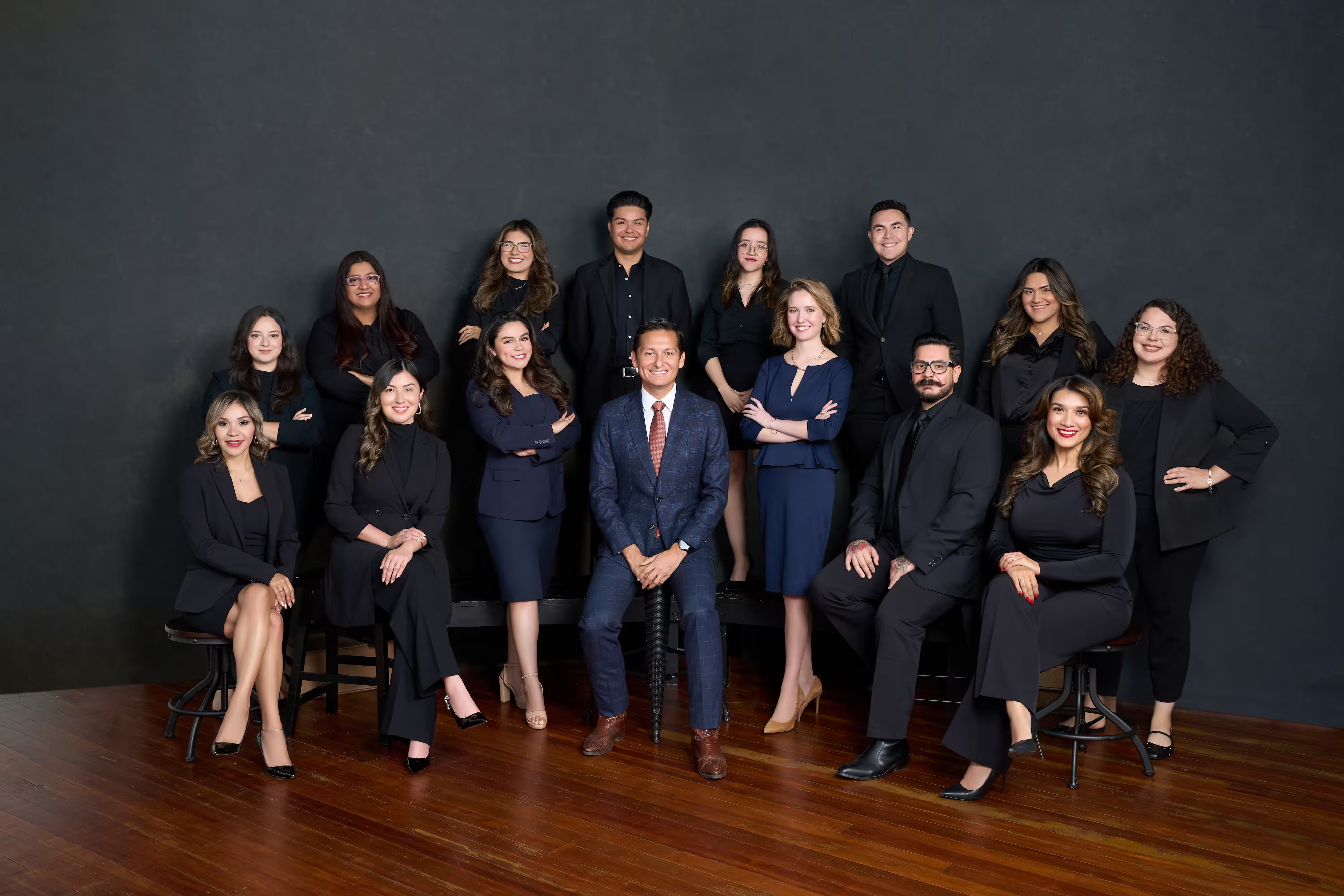
Members of our team are fluent in Spanish and ready to serve clients in their preferred language.
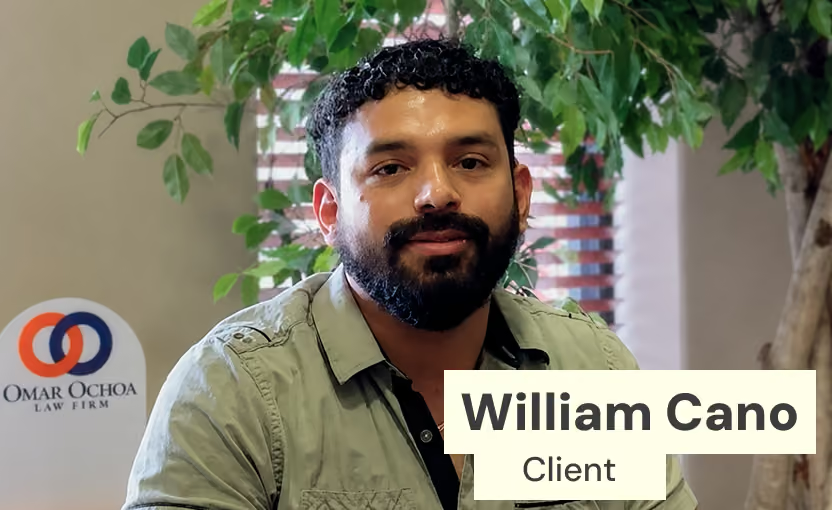
Want to hear more about how we help and what we do? Don’t just take our word for it. Read our real client reviews and testimonials - and see videos from our real former clients.


We handle insurance litigation across Texas, including but not limited to Dallas, Austin, Brownsville, Cameron County, and Hidalgo County.
Our experienced litigation team also represents clients in the following areas:
If your Texas insurance company has denied your valid claim, delayed payment without justification, or engaged in other unfair practices, you have legal options.
Call us at (956) 253-3121 or fill out the online contact form to schedule a free case review with our insurance bad faith lawyers.

Available 24/7
No fees unless we win
Se Habla Español
Under Texas Insurance Code § 542.055, insurers must acknowledge receipt of your claim within 15 days. They have 15 business days after receiving all necessary materials to accept or deny the claim (§ 542.056), and must issue payment within 5 business days after approval (§ 542.057). Missing these deadlines may constitute bad faith.
Yes, you can sue if the denial was unreasonable or violated your policy terms. However, you must first exhaust the insurer's internal appeals process. A bad faith claim requires proving the insurer lacked a reasonable basis for denial and knew or should have known the claim was valid.
Not every claim denial is bad faith. Insurers can legitimately deny claims that fall outside policy coverage or lack sufficient evidence. Bad faith occurs when an insurer denies a valid claim without reasonable justification, fails to investigate properly, or uses deceptive practices to avoid paying what's owed.
Beyond your original policy benefits, you may recover treble damages (up to 3x actual damages under Tex. Ins. Code § 541.152), attorney's fees, court costs, interest (18% per annum under § 542.060), emotional distress damages, and potentially punitive damages in cases of gross negligence or malicious conduct.
Insurance Litigation
Updated:
September 23, 2026
By
Omar Ochoa
Insurance Litigation
Updated:
September 23, 2026
By
Omar Ochoa
Insurance Litigation
Updated:
September 23, 2026
By
Omar Ochoa


