


No Win, No Fee. Guaranteed.
Texas records more major hail events than any other state, with 902 in 2025 alone, according to the Insurance Information Institute. Yet after a Houston storm shreds your roof, the same insurer that took your premiums often minimizes the loss, calls the damage "cosmetic," or blames wear and tear. The Houston hail damage lawyers at Omar Ochoa Law Firm demand the full payment your policy owes for a denied, delayed, or underpaid claim.
Free Case Review
Available 24/7
No Fee Until We Win

The Omar Ochoa Law Firm stands between you and an insurance company focused on shrinking your payout. Adjusters rush inspections, inspect only what you point to, and label storm damage as pre-existing or purely aesthetic. We challenge those undervalued assessments across the Houston area and hold carriers to the policies they wrote and to the standards Texas law requires.
We work on a contingency-fee basis, so you pay no upfront costs and owe nothing unless we recover for you. Whether your hail claim was flatly denied or the check falls far short of the true repair cost, we are ready to build a case strong enough to change the carrier's math. Reach out online or call (956) 253-3121 to discuss your options.
Request a Free Case Review
We are available to assist you 24 hours a day!
Need help right away? Call us!
(956) 253-3121


A single hailstorm rarely damages just one part of a property, and insurers often isolate each loss to reduce what they pay. Our Houston hail damage attorneys package the complete loss into one documented claim, from the visible roof damage down to the hidden problems a quick inspection misses.
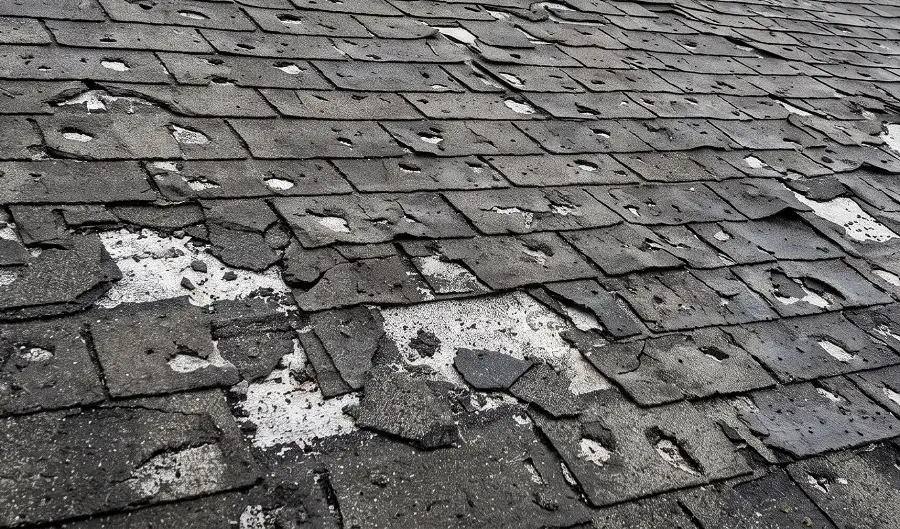
Roof damage is the core of most hail claims. The impact of hail bruises asphalt shingles, cracks the mat beneath the surface, knocks off protective granules, and loosens flashing. That damage shortens the roof's life and opens paths for leaks, even when it looks minor from the ground. We push for full roof replacement when repairs cannot restore the roof to its pre-loss condition.
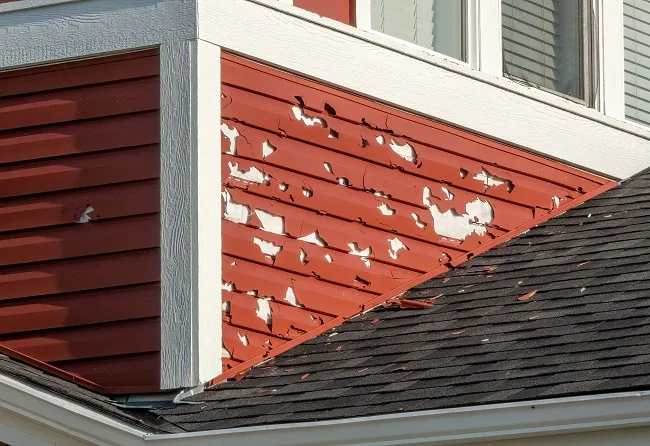
Siding and gutters take direct hits during a storm. Hail dents metal and aluminum siding, cracks vinyl, chips paint, and bends or splits gutters and downspouts that then fail to drain. Fences, garage doors, and detached structures suffer the same impact, and these components are typically covered when a storm causes the loss.

Windows and skylights shatter or seal-fail under hail, and broken glass lets wind-driven rain reach the interior. Compromised window seals fog over and fail months later. We document these losses so the interior water damage that follows is tied back to the covered storm event, not written off as a separate, excluded cause.
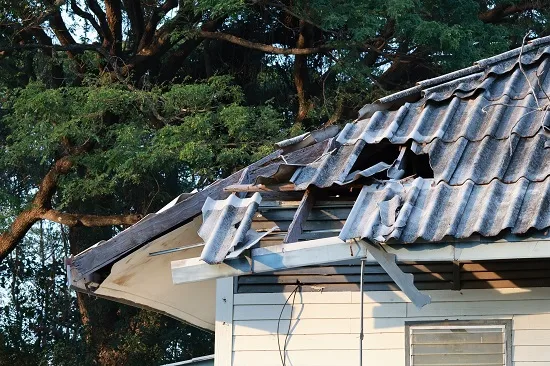
Rooftop HVAC units are among the most expensive hail casualties and among the most overlooked. Hail bends condenser fins, dents coils, and degrades performance long before the system fails outright. For commercial buildings, rooftop equipment and packaged units carry large replacement costs that adjusters routinely undervalue.

Commercial hail claims across Greater Houston involve flat and metal roofs, storefronts, signage, and parking structures, and the stakes climb fast. We represent:
Business owners
Condominium and homeowners associations
Apartment complexes
Restaurants
Dealerships
Churches
Schools
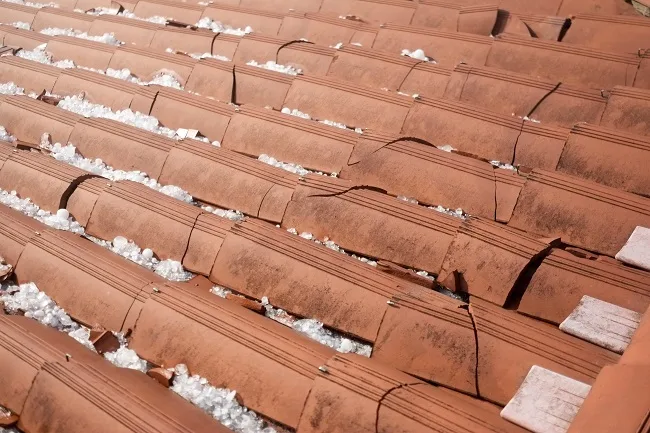
Hidden damage is where insurers win when policyholders go it alone. Fractured decking, saturated insulation, and weakened roof structure often stay invisible from the ground and grow worse with the next storm. We bring in independent inspectors to climb the roof and document what a ground-level "drive-by" adjustment leaves out.
When the Insurance Company Pushes Back, We Step Forward
Underpaid claim? Damage called cosmetic? Denial based on wear and tear? Our Houston hail damage attorneys build cases designed for leverage in negotiations and for trial if the carrier will not pay what it owes. Get a free case evaluation today.
Houston sits inside the storm corridor that makes Texas the country's hail leader. Warm, moist Gulf air colliding with cooler air over flat terrain feeds the severe thunderstorms that drop hail across the metro every spring and summer.
Hailstones as small as one inch can bruise shingles and crack glass, and stones two inches or larger damage most roofing materials. When a single storm has thousands of Houston property owners filing at once, that is exactly when carriers are slowest to respond and quickest to close files.
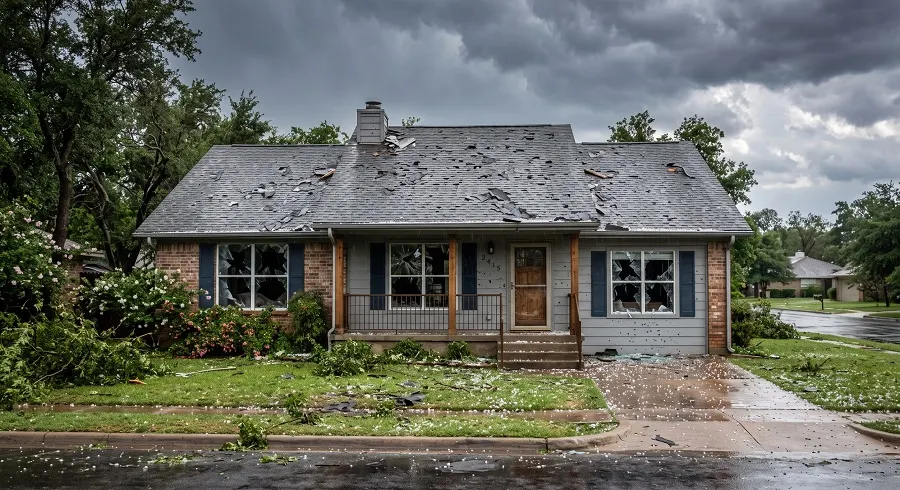
Most Texas property policies cover hail as a standard peril, but coverage on paper and payment in practice are two different things. The specifics turn on your deductible, endorsements, exclusions, and whether your policy pays replacement cost or depreciated value.
A typical Houston homeowner’s policy addresses hail through dwelling coverage for the structure, personal property coverage for belongings, other-structures coverage for detached garages and fences, and additional living expenses if the home becomes unlivable during repairs. Wind-driven rain that enters through a storm-created opening is often covered as well, though insurers frequently try to reclassify it to avoid payment.
Commercial policies cover building repair or replacement, business personal property, and, critically, business interruption for income lost while the property is out of service. Extra-expense coverage can pay the added costs of keeping operations running during repairs. These provisions matter most for Houston businesses forced to close or scale back after a storm.
Wind and hail deductibles in Texas are frequently percentage-based, calculated as a share of your home's insured value rather than a flat dollar figure. On a $400,000 home, a common percentage deductible can leave you responsible for several thousand dollars before coverage begins.
Under Texas law, it is illegal for a contractor or roofer to offer to waive or rebate your deductible, and your insurer can demand proof you actually paid it, as the Texas Department of Insurance explains.
Replacement cost value (RCV) and actual cash value (ACV) determine how much of your roof the carrier funds. An ACV policy pays the depreciated value in a single check, so an older roof receives far less.
An RCV policy pays the depreciated amount first, then releases the withheld depreciation after you complete and document the repairs, which means insurers sometimes bank on policyholders never finishing the work and not claiming the second payment.
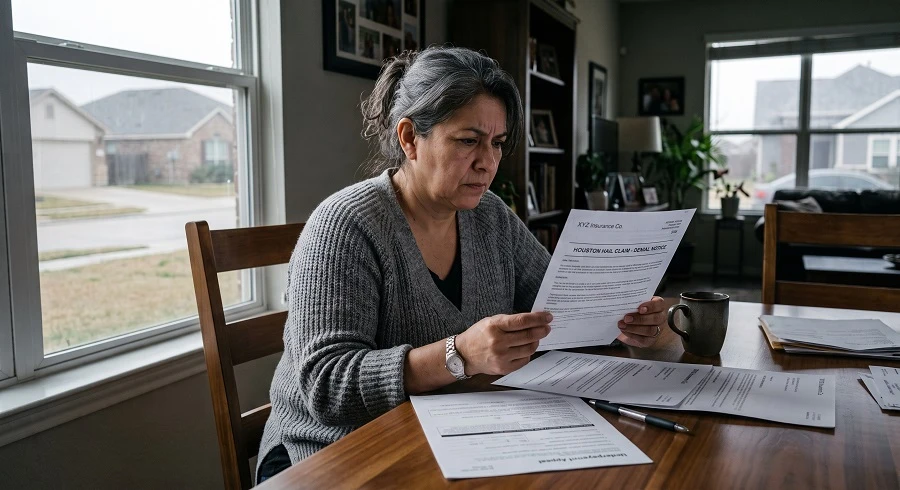
Hail claims are among the most contested property claims in Texas, and carriers rely on a familiar set of defenses to limit exposure. A denial or a lowball offer is rarely the final word once a lawyer challenges the reasoning behind it.
Our Houston hail damage lawyers demand documentation for every denial and challenge conclusions that the carrier cannot support.
The adjuster who inspected your roof already consulted the carrier's playbook and its lawyers before making that offer. You deserve to have legal counsel analyzing your claim with the same rigor. Reach out to our team for guidance.
A properly built hail claim covers far more than a patch of shingles. Depending on your policy and the extent of the loss, recovery can include repairs, replacement, and additional amounts Texas law allows when an insurer mishandles the claim.
You may also be able to recover statutory damages when the carrier violates its obligations.
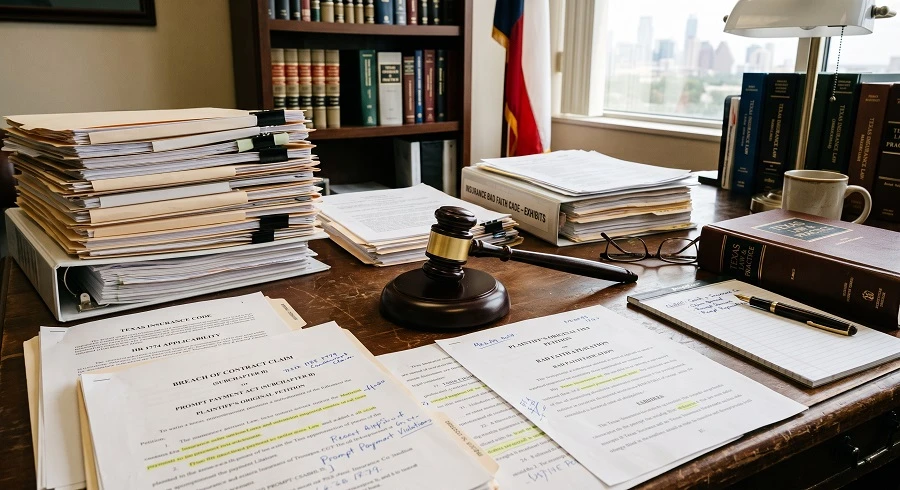
Texas gives policyholders real leverage against carriers that delay, underpay, or deny without a reasonable basis. When an insurer breaks these rules, the claim is no longer just about your roof; it is about the extra damages the law attaches to bad conduct.
The Prompt Payment of Claims Act sets firm deadlines. Under Texas Insurance Code Chapter 542, an insurer must acknowledge the claim, request the information it needs, accept or reject the claim within statutory windows, and pay promptly once it accepts. Miss those deadlines and the carrier owes 18% annual interest on the claim plus your reasonable attorney's fees, whether it acted in bad faith or not.
Chapter 541 prohibits unfair and deceptive claim practices, such as failing to conduct a reasonable investigation, misrepresenting policy provisions, or refusing to pay a valid claim without a reasonable basis.
Texas Insurance Code Chapter 541 allows recovery of actual damages and, for knowing violations committed by companies other than the Texas Windstorm Insurance Association (TWIA), up to three times those damages.
Beyond the statutes, Texas recognizes a common-law duty of good faith and fair dealing, and the Deceptive Trade Practices Act reinforces those protections. Together, they let policyholders pursue extra-contractual damages when a carrier's handling of a hail claim crosses the line from a coverage dispute into misconduct.
Deadlines move quickly after a storm, and missing one can end an otherwise strong claim. Two clocks matter: your policy's reporting requirement and the legal deadline to sue.
Your policy requires prompt notice of the loss, and late notice gives the insurer grounds to challenge the claim. Texas property-damage claims are generally subject to a two-year deadline under Texas Civil Practice and Remedies Code § 16.003, and Insurance Code and DTPA claims carry their own two-year limits. Many policies also shorten the contractual time to sue to as little as two years.
The clock can start the moment an insurer denies or signals it will not pay more, so early legal review protects your rights before time runs out.
The first days after a storm shape both your safety and your claim. The Texas Department of Insurance recommends a clear sequence that our attorneys reinforce.
After a Houston hailstorm, storm-chasing contractors go door to door promising fast, cheap repairs, and their pressure often turns a routine claim into a mess. The National Insurance Crime Bureau warns that most post-storm repair scams begin with an unsolicited visit: if you did not request it, reject it.
Any offer to waive your deductible is illegal in Texas. Get written estimates from a contractor you researched, and talk to a lawyer before signing anything that addresses your claim or benefits.
The longer a claim sits, the more room a carrier has to dispute it. Talk to our Houston hail damage attorneys now and put pressure on your insurer from the start.
Insurance companies have investigators, engineers, and adjusters who are trained to keep payouts low. We assemble a stronger team working for you and prepare every case as though it may go to trial.
We read what your policy actually says, not what the adjuster claims it means. Texas law requires ambiguous policy language to be interpreted in the policyholder's favor, and we enforce that rule.
We retain independent roofing and structural professionals to inspect the property and document the full extent of the damage, including the hidden losses a carrier's ground-level review skips.
We tie your damage to the specific storm using weather and radar data, which defeats the "wear and tear" and "pre-existing" defenses insurers lean on.
We calculate the true cost to restore the property at the rate your policy stipulates, including full roof replacement and interior work.
We handle all communication with the insurance company. Their recorded-statement requests, documentation demands, and delay tactics lose their edge once attorneys take over the file.
When a carrier denies a valid claim or refuses to pay policy limits, we file suit and pursue the extra damages, interest, and attorney's fees Texas law allows.
A denial is not final. We appeal through the insurer's internal process and file suit if the carrier holds its position, and many hail denials reverse once a lawyer pushes back with documentation.
Demand the Hail Damage Compensation You Need
We have helped Houston property owners secure fair settlements after storm damage. Put our experience to work with a free, no-obligation case review.
Houston property owners choose our firm because we pair an aggressive claim strategy with real, personal attention to every case.

Our attorneys have recovered over $1 billion for clients across Texas. Insurance carriers know we build serious cases and push for full payment rather than quick discounts. Past results do not guarantee future outcomes.

Property damage and insurance coverage fights are what we do. We use detailed policy analysis and direct legal pressure to challenge denials, underpayments, and bad-faith conduct.

We prepare every claim as if it could go to trial, and that preparation strengthens negotiations and keeps leverage on your side from day one.

There are no upfront costs. We are paid only if we recover compensation for you.

Storm damage does not wait for office hours, and neither do we. You can reach a member of our team at any time.
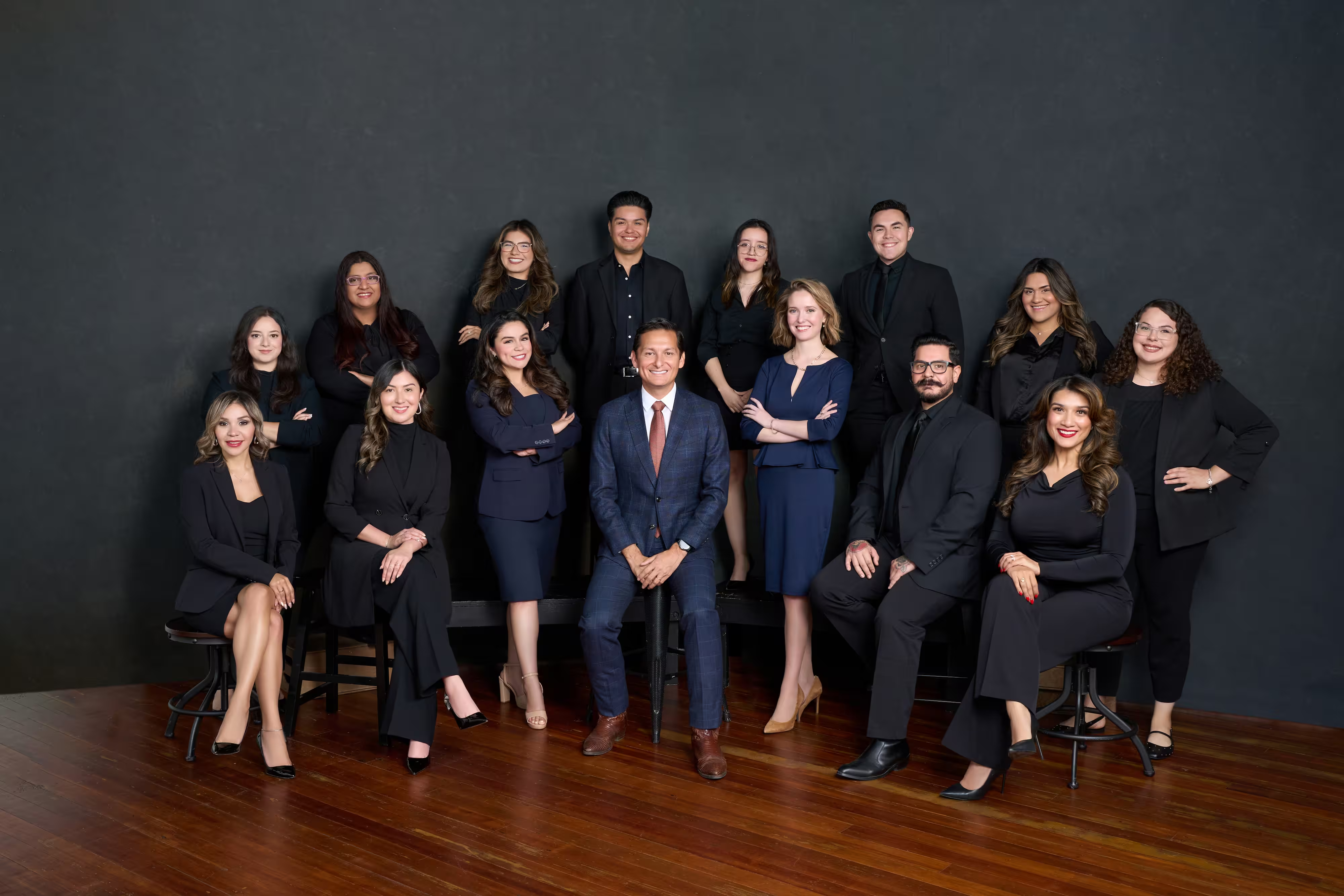
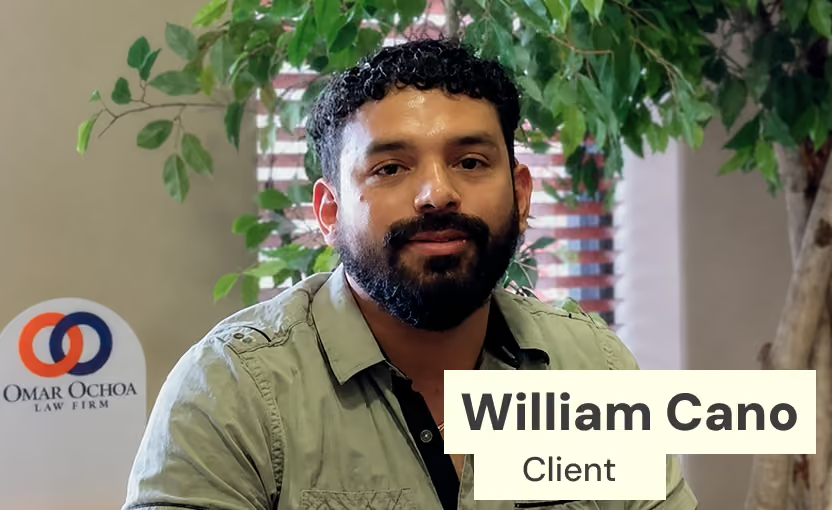
Want to hear more about how we help and what we do? Don’t just take our word for it. Read our real client reviews and testimonials - and see videos from our real former clients.


From downtown high-rises to neighborhoods across Harris County, our team represents Houston-area property owners wherever hail damage strikes. We handle hail claims throughout the metro while maintaining personal attention to each case.
Rebuilding after a hailstorm is hard enough without also fighting your own insurer. Let our team manage the claim while you focus on getting your property back in order. Call Omar Ochoa Law Firm at (956) 253-3121 or contact us to schedule your free consultation.

Available 24/7
No fees unless we win
Se Habla Español
Most Texas homeowners and commercial policies cover hail damage to roofs and exteriors if you carry wind and hail coverage. Coverage depends on your deductible, endorsements, and exclusions, so it helps to have an attorney review the policy against the denial or offer.
An insurer can try, but the label is often wrong. Some policies add cosmetic-damage exclusions, especially on metal and impact-resistant roofs, yet hail that dents a roof can still cause leaks and shorten its life. That functional damage is generally not cosmetic, and the distinction is worth challenging.
Texas property-damage claims are generally subject to a two-year deadline, and Insurance Code and DTPA claims carry two-year limits of their own. Many policies also shorten the contractual deadline to sue. Assume a short window from the date of loss or denial and speak with a lawyer well before then.
An underpayment can still be challenged. Carriers often approve limited repairs while ignoring structural components or a needed full-roof replacement. Accepting a partial check does not necessarily close the claim, but it’s important to review all documents.
Many Texas policies use a percentage-based wind and hail deductible calculated on your home's insured value rather than a flat amount, which can run into thousands of dollars. Any contractor offering to waive that deductible is acting illegally under Texas law.
Omar Ochoa Law Firm handles hail damage claims on a contingency-fee basis. You pay nothing up front and owe no attorney's fee unless we recover compensation for you.
It can be. When a carrier denies or underpays a valid claim, Texas law allows recovery of the claim itself plus interest, attorney's fees, and in some cases, additional damages. A free case review will tell you whether litigation makes sense for your situation.
Recorded statements are often used against policyholders, and adjusters ask questions designed to create grounds for denial. Let your attorney handle statements and communication with the carrier instead.
Insurance Litigation
Updated:
July 6, 2026
By
Omar Ochoa
Property Damage
Updated:
September 23, 2026
By
Omar Ochoa
Property Damage
Updated:
September 23, 2026
By
Omar Ochoa


